The Prestige Standard stone-care team · Published 5 November 2026 · Updated 5 November 2026 · 8 min read
The short answer
Sandstone does not always need sealing, but a lot of it benefits. Sealing is usually worthwhile on paving, steps, outdoor kitchens, driveways and pool coping, and on coastal stone that takes salt spray. It is often unnecessary, and sometimes harmful, on walls, heritage facades and any stone that is already showing damp or salt.
The deciding questions are simple. Is the stone horizontal and used? Is it exposed to salt, oil, leaves or constant wetting? And can moisture already inside the stone still get out once it is sealed? The rest of this guide works through those questions, explains the main sealer types, and is honest about what you can do yourself.
What a sealer actually does
Sandstone is porous. Left untreated, it draws in water, and with the water comes whatever is dissolved or suspended in it: pool salt, sea spray, tannin from leaves, barbecue fat, red wine. Once those are in the pores, they are much harder to remove than they would have been on the surface.
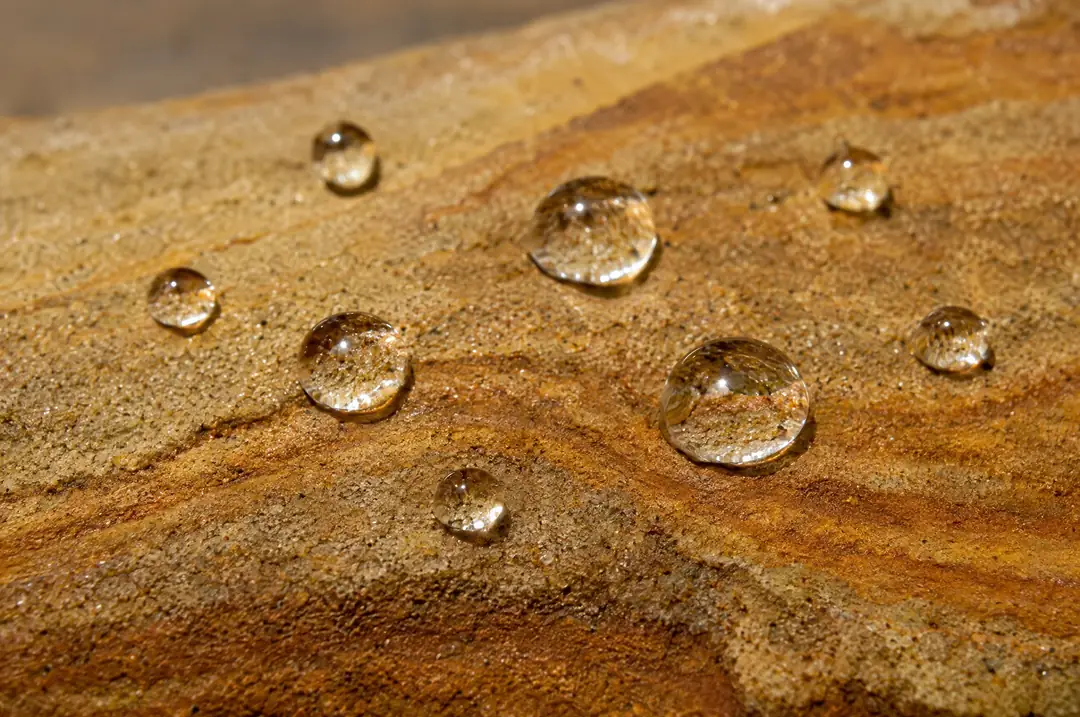
A good sandstone sealer is a penetrating sealer, also called an impregnator. It soaks into the stone and lines the pores rather than forming a layer on top. Water and oil bead on the surface for longer, so you have time to wipe up spills and rinse off salt. Manufacturers of these products describe them as breathable: Dry-Treat, for example, says its impregnating sealer lets water vapour escape freely, which prevents moisture building up inside the treated stone.
A topical sealer works differently. Acrylic, polyurethane and similar coatings form a film on the surface. They can look glossy and rich at first, but outdoors a film tends to wear unevenly, yellow in sun, become slippery when wet and trap moisture and salt beneath it. When it fails, it has to be stripped before anything else can go on.
Sealing is not stain-proofing. Even the best impregnator buys you time, not immunity. It reduces how fast things soak in and makes cleaning easier, which is why Sydney stone suppliers such as Gosford Quarries recommend sealing paving that sees regular use.
Where sealing makes sense
- Paving, terraces and entertaining areas. Food, drink, sunscreen and leaf litter all stain unsealed sandstone. Sealing makes everyday cleaning far easier.
- Pool coping and pool surrounds. Salt-chlorinated water soaks into unsealed coping and crystallises as it dries, which over time can pit and fret the edge. A salt-resistant impregnator is one of the most effective protections. See our pool coping service.
- Coastal stone. Clifftop and beachside terraces on the Northern Beaches and in the Eastern Suburbs take wind-blown salt year-round.
- Driveways and barbecue areas. Oil and grease are among the hardest stains to draw out of sandstone. Sealing keeps them nearer the surface.
- Newly laid sandstone. Once the bedding and joints have cured and the stone is dry, sealing early protects it before the first marks appear.
What sealing won't do
It helps to be clear about the limits before you spend money on sealing.
- It won't fix a moisture problem. If water is getting into the stone from behind or below, through a garden bed, a leaking downpipe or poor drainage, a sealer on the face does nothing to stop it.
- It won't remove existing stains. Rust, oil and tannin already in the stone need cleaning or poulticing first. Sealing over them makes them permanent.
- It won't rebuild damaged stone. Sandstone that is sandy, flaking or fretting at the surface may need consolidation or repair by a specialist before sealing is worth considering. Our sandstone restoration service covers this.
- It won't end maintenance. Sealed sandstone still needs sweeping, rinsing and an occasional proper clean. The difference is that cleaning becomes easier and more effective.
Where to be cautious, or not seal at all
Sealing is where sandstone is most often harmed, usually by sealing the wrong surface or using the wrong product.
- Walls with damp or salt. NSW heritage guidance on salt attack and rising damp is blunt on this point: water-repellent coatings on masonry walls can trap moisture and salts behind them and lead to the loss of the stone's protective outer surface. The guide advises against sealing such walls at all. If a wall is damp at its base or showing white salts, the moisture source needs fixing first.
- Heritage facades and carved stone. Historic walls usually need to breathe freely and rarely benefit from sealing. If your property is heritage-listed or in a heritage conservation area, check with your council before coating historic stone. Our regulations page has more.
- Stone with active efflorescence. Sealing over salts locks the problem in. Read our guide to efflorescence on stone pavers first.
- Damp or dirty stone. Sealer cannot penetrate wet pores, and it fixes in place whatever mould or grime it is applied over.
- Stone with an old coating. A failing acrylic or polyurethane must be removed before a penetrating sealer can work.
| Situation | Our usual advice | Why |
|---|---|---|
| Paving and steps in regular use | Seal with a penetrating sealer | Reduces staining and makes cleaning easier |
| Pool coping, salt pool | Seal, and check yearly | Limits salt water entering the stone |
| Ocean-facing terrace | Seal with a salt-resistant impregnator | Constant salt exposure |
| Sound feature wall, no damp | Optional | Helps against staining and growth; must stay breathable |
| Retaining wall with damp or white salts | Don't seal until the moisture is fixed | Sealing can trap moisture and salts |
| Heritage facade or carved stone | Usually leave unsealed; get advice | Breathability matters most; approvals may apply |
| Stone with a peeling old coating | Strip first, then reassess | New sealer cannot penetrate a film |
The three main types of sealer compared
| Type | How it works | Look | Breathability | Best use |
|---|---|---|---|---|
| Penetrating, natural look | Soaks in and lines the pores | Little or no colour change | Good | Most paving, coping and walls that suit sealing |
| Penetrating, colour-enhancing | Soaks in and deepens tone | Richer, a little like damp stone | Good | Where you want the honey and ochre banding brought forward |
| Topical film (acrylic, polyurethane) | Forms a coating on the surface | Satin to gloss | Poor | Rarely right for outdoor sandstone |
Within the penetrating category, products differ in chemistry, solvent or water base, and resistance to salt and oil. Matching the product to the stone's porosity and exposure matters more than the brand. Even natural-look impregnators can lighten or darken some stones slightly, so always see a test patch dry before committing. Our guide to penetrating versus enhancing sealers goes further.
Sealing and slip resistance
Around pools, on steps and on sloping paths, grip matters as much as looks. In Australia, slip resistance of new pedestrian surface materials is classified under AS 4586, existing surfaces are measured under AS 4663, and Standards Australia's handbook SA HB 198 guides how to specify and test them.
Penetrating sealers sit inside the stone and generally change its feel far less than film-forming coatings do, which are a common cause of slippery stone. But a sealer is still a change to the surface. We test the finish on site before treating a whole pool surround or stair, and where slip resistance is critical, for example a rental property or a steep entry, an independent slip test can be commissioned on the finished surface.
Remember too that sealing is only one factor in grip. Growth, leaf litter, pool splash and worn or polished stone all reduce slip resistance, so a clean, well-maintained surface matters as much as the product on it.
Preparation decides the result
Most sealing failures we are called to were decided before the sealer was opened. A penetrating sealer can only go where the pores are open, clean and dry, so preparation is where most of our time on a sealing job goes.
The stone is cleaned to bare, sound sandstone first. Mould and algae are killed and removed, not just lightened, because sealing over live growth locks it in. Old coatings are tested for and stripped if present. Efflorescence is brushed off and its cause identified. Then the stone is left to dry, which in Sydney's humid months, on shaded or south-facing paving, can take longer than people expect. We check moisture before sealing rather than judging by eye, because sandstone can look dry on the surface while the pores beneath are still damp.
Weather matters on the day too. Most products have a temperature range and need a rain-free period to cure, and full sun on hot stone can make some sealers flash off before they penetrate. We would rather move a booking than seal on a damp morning or ahead of a forecast storm.
How long does a sandstone sealer last?
There is no single answer, and we are wary of anyone who gives one without seeing the site. Longevity depends on the product, how well the stone was prepared, how deeply the sealer penetrated, and what the surface faces: foot traffic, pool water, full sun, sea spray or cleaning chemicals. Some manufacturers offer long written warranties, but these typically depend on conditions such as an accredited applicator and a documented maintenance routine.
The practical test is easy. Sprinkle a little water on the stone. If it beads or sits on the surface, protection is working. If it darkens the stone and soaks in within a minute or so, that area is due for attention. High-wear zones such as pool edges and doorways usually go first.
Expect some white salt to appear on new or recently sealed stone. Dry-Treat notes that its impregnator takes several weeks to fully bond, and that salts can be pushed to the surface during that period. Dry brushing usually deals with it.
Can you seal sandstone yourself?
Yes, on a simple, sound area such as a small courtyard or a set of new pavers, a careful owner can apply a penetrating sealer successfully. The steps that matter most are the unglamorous ones.
- Clean thoroughly to bare stone, using the methods in our guide on how to clean sandstone.
- Let it dry fully. Several fine days, not a few hours. Shaded stone takes longer.
- Read the label and confirm the product is a penetrating or impregnating sealer suitable for sandstone and outdoor use.
- Test a patch and let it dry before judging the colour.
- Apply evenly and wipe off any surplus before it dries on the surface, where it can leave a sticky or patchy film.
- Respect the cure time for rain, foot traffic and furniture.
Hardware-store sealers vary widely. Some are capable impregnators; others are film-forming coatings sold for many surfaces. Avoid anything described as gloss or wet-look for outdoor sandstone.
Call a specialist if the area is large, around a pool, coastal or heritage, if there is an old coating to remove, if salts or damp are present, or if you want a precise colour result. Our sandstone sealing service matches the sealer to your stone, records the product and date, and gives you a realistic re-seal interval. We work across the Eastern Suburbs and Northern Beaches with vetted, insured technicians.
Sources
- David Young, Salt Attack and Rising Damp: A guide to salt damp in historic and older buildings (Heritage Council of NSW and partners, 2008)
- Dry-Treat STAIN-PROOF Premium Impregnating Sealer, product information (distributor page)
- Dry-Treat, How to prevent efflorescence on limestone tiles (Spec-Net press release)
- Gosford Quarries, How to clean sandstone guide
- Standards Australia, SA HB 198:2014 Guide to the specification and testing of slip resistance of pedestrian surfaces
- Building Performance (NZ) CodeHub summary of SA HB 198:2014, referencing AS 4586 and AS 4663