Sandstone cleaning
Sandstone is soft. Blast it with a high-pressure tip and you remove the stone itself, not just the dirt. We clean it the way conservators recommend: low pressure, the right chemistry, and patience.
- $20 million public liability
- Eastern Suburbs & Northern Beaches
- Price on request
Most of the sandstone we're called to has been damaged by the cleaning before ours. A household pressure washer held too close leaves pale stripes and a furry, sanded surface that soaks up dirt faster than before. Hydrochloric acid, still sold as a 'brick cleaner', attacks the natural iron in Hawkesbury sandstone and leaves orange-brown blooms that are much harder to remove than the original grime.
Our approach starts with a test patch in an inconspicuous spot. We identify what is actually on the stone (black mould, green algae, grey lichen, tannin from leaves, traffic grime or atmospheric soot) and choose the cleaner and dwell time to suit. Organic growth is killed at the root with a biocide and allowed to work, so the clean lasts. The surface is then rinsed with low-pressure water or controlled hot water, never a turbo nozzle.
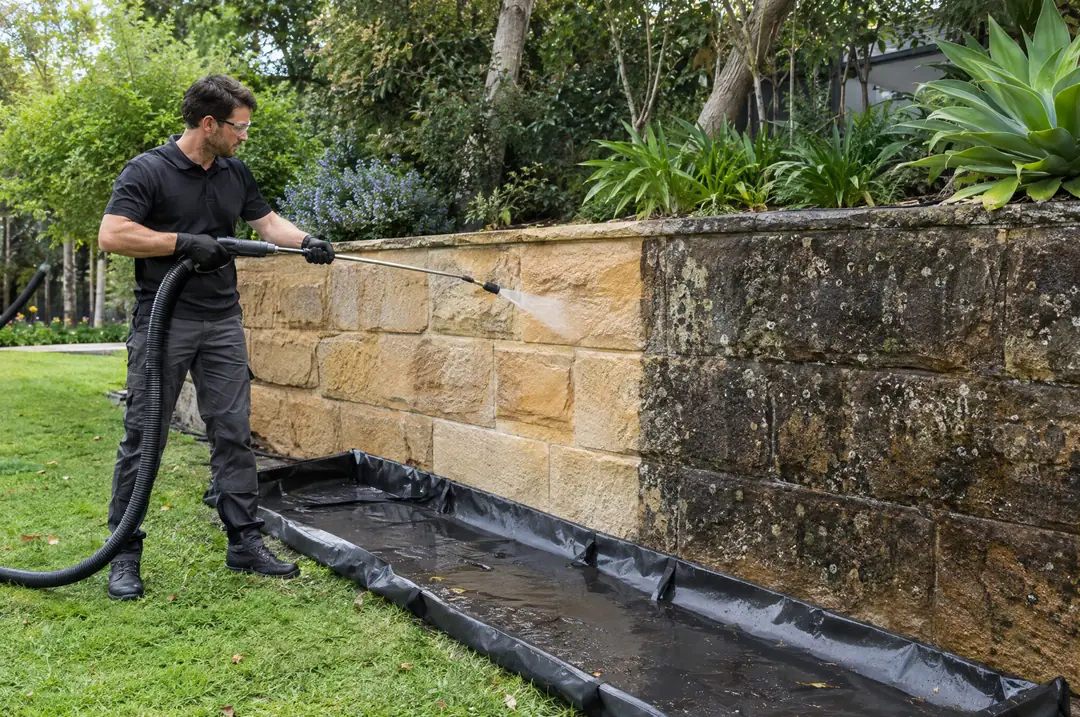
Every litre of run-off is managed. We bund and vacuum-recover wash water on site so detergents and biocides don't reach the street gutter. In NSW, stormwater drains are for rain only.
Signs you need sandstone cleaning
- Black or green staining on shaded, south-facing walls and steps
- Grey-white lichen rosettes on copings and capping stones
- Slippery steps after rain
- Dark tide-marks where garden beds or downpipes splash the stone
- Pale stripes or a 'sanded' feel from a previous high-pressure clean
- Dull, grimy paving that no longer shows its honey and ochre banding
How we do it
- Inspect and testWe look at the stone type, its condition and any previous coatings, then run a test patch to confirm the cleaner, dwell time and pressure before touching the main area.
- Protect the surroundingsPlants, timber, metalwork and glass are covered or wetted down. Drains and gutters are bunded so nothing leaves the site.
- Treat the growthMould, algae and lichen are treated with a stone-safe biocide and left to dwell. Killing the organism is what stops it coming straight back.
- Low-pressure rinseA soft-wash or controlled hot-water rinse lifts the softened growth and grime without eroding the face of the stone.
- Recover and disposeWash water is vacuumed up and disposed of correctly. The site is left clean and dry.
- Advise on sealingOnce the stone has fully dried, usually after a few days of fine weather, we recommend whether a penetrating sealer is worthwhile. Sealing wet stone traps moisture.
Why we don't acid-wash or high-pressure sandstone
Hawkesbury sandstone is mostly quartz grains held together by clay and iron-oxide cements. Strong acids dissolve that cement and release iron, which is where orange 'acid burn' comes from. High-pressure jets cut into the binder and strip away the weathered skin that protects the stone underneath.
Heritage NSW's maintenance guidance takes the same view for historic sandstone: the gentlest method that works, starting with water. We hold every property to that standard, heritage-listed or not.
Aftercare
- Sweep or blow leaves off regularly. Tannins stain when wet leaves sit on stone.
- Trim plants that keep walls permanently damp and shaded.
- Rinse salt spray off coastal paving with fresh water every few weeks.
- Avoid household bleach and acid cleaners. Ask us for a pH-neutral stone soap.
- Book a maintenance clean every 12 to 24 months on shaded or coastal sites.
Frequently asked questions
Straight answers from our stone-care technicians.
Can you pressure clean sandstone?
Only at low pressure with a wide fan, or as a hot-water soft wash, and only after the stone has been treated. A standard high-pressure tip held close to the surface erodes sandstone permanently, so we don't use one.
How long does a sandstone clean last?
On an open, sunny surface a proper biocidal clean commonly holds for a few years. On shaded, south-facing or coastal stone, growth can start returning within 12 to 24 months, which is why we may suggest a maintenance plan or a sealer.
Will cleaning make my sandstone look new?
It will bring back the natural colour and banding, but weathered sandstone keeps its character. Deep iron staining, salt damage and erosion are restoration issues, which we can quote for separately.
Is the cleaning chemical safe for my garden and pets?
We use products suited to stone and the setting, protect plants during the work, and recover the run-off. Keep pets off the area until it has been rinsed and dried. We'll tell you exactly when.
Do you clean heritage-listed sandstone?
Yes, using conservation-grade, low-impact methods. If your property is heritage-listed or in a heritage conservation area, check with your council about whether the works need approval before we start. Our regulations page explains this.
Do I need to be home?
Not usually. We need access to water and power, a clear work area and a way through the side gate. We send photos when the job is finished.
Related services
- Sandstone sealingA good sandstone sealer is invisible. It sits inside the pores, not on top, so water beads off and…
- Sandstone restorationRestoration goes past cleaning. It deals with what has gone wrong inside the stone: deep rust and…
- Stone stain removalEvery stain has a chemistry, and so does every stone. Bleaching or acid-washing a stain usually…