Travertine honing
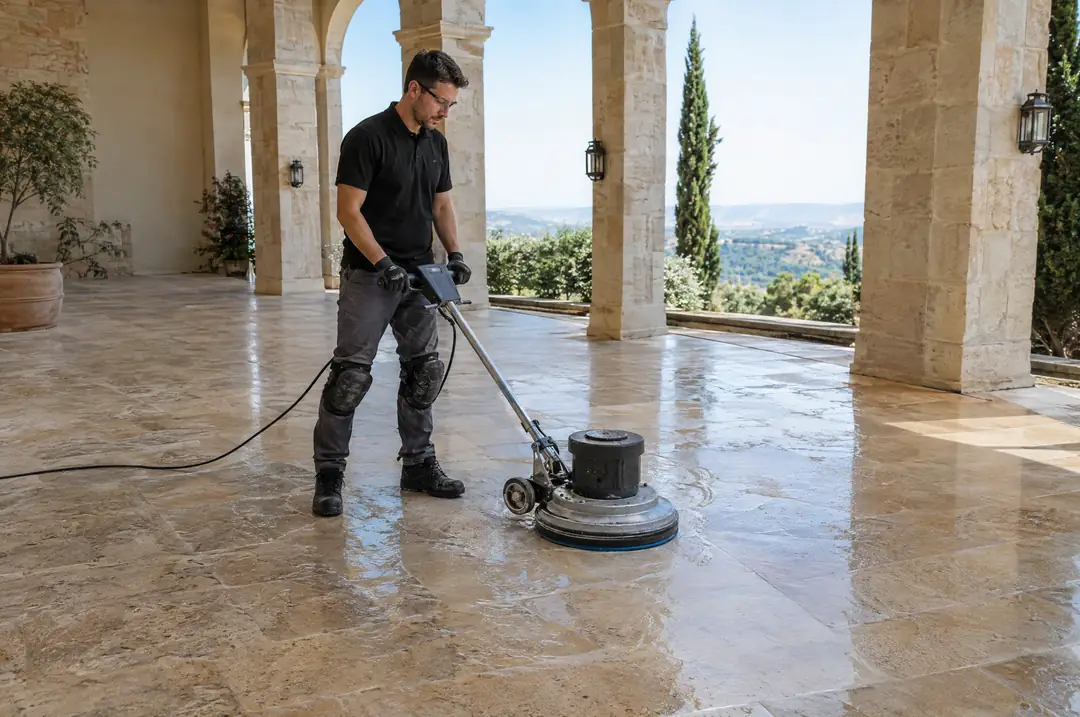
When travertine is etched, scratched or worn uneven, cleaning won't fix it. Honing with diamond pads removes a fine layer of the surface and brings back a smooth, even satin finish.
- $20 million public liability
- Eastern Suburbs & Northern Beaches
- Price on request
Etch marks from acidic spills, pool chemicals or the wrong cleaner leave dull, rough patches. Traffic wears paths through the finish, and furniture leaves scratches. Honing grinds the surface back with progressively finer diamond abrasives until the whole area is consistent again.
Outdoors, we stop at a honed finish rather than polishing to a gloss. A honed surface is more practical underfoot and hides wear better. Indoors, travertine can be taken further if you want a higher sheen.
Honing is wet work. The slurry is contained and recovered, furniture and walls are protected, and holes exposed during honing are refilled before the final pass and sealing.
Signs you need travertine honing
- Dull, watermark-shaped etch marks that don't wash off
- Visible traffic paths through the finish
- Scratches from furniture or grit
- A patchy finish after previous DIY attempts
- Lippage edges that catch dirt
How we do it
- Assess the finish and the damageWe test how deep etching and scratching go, which decides the starting grit.
- Protect and containWalls, glass, doors and pool edges are protected. Slurry is controlled and recovered.
- Hone in stagesDiamond pads step from coarse to fine until the surface is even.
- Fill and refineExposed holes are filled, then the final honing pass blends everything together.
- Clean and sealA final clean, drying time, then a penetrating sealer to protect the fresh surface.
Honed, not glossy, outdoors
A high polish on outdoor travertine looks striking on day one, but it shows every etch, shoes and grit wear it down quickly, and it is more slippery when wet. A fine honed finish is the practical high-end choice for terraces and pool areas.
Honing is quoted after an inspection, because the depth of damage decides how much work is involved.
Aftercare
- Seal promptly after honing. Freshly honed stone is at its most absorbent.
- Clean only with pH-neutral stone cleaner.
- Use felt pads under furniture, and doormats at entries.
Frequently asked questions
Straight answers from our stone-care technicians.
What is the difference between honing and polishing travertine?
Honing produces a smooth matte-to-satin finish. Polishing continues to finer grits for a gloss. Outdoors we recommend honed for grip and durability.
Can etch marks be removed from travertine?
Yes. Etching is surface damage, and honing removes it by bringing the surface down to an even level. Light etching may only need a fine pass.
Is honing messy?
It is wet work, but the slurry is contained and recovered and surrounding surfaces are protected. You won't be left with a mess.
Can tumbled travertine be honed?
Tumbled travertine has deliberately rounded edges and a textured face. It can be honed flatter, but that changes its character, so we discuss the look you want first.
How long does honing take?
It depends on the area and the damage. A typical loggia or pool terrace takes from one to several days, including filling and sealing.
Do you hone sandstone too?
Sandstone paving can sometimes be lightly honed to remove surface damage, but it behaves very differently. We assess it case by case.
Related services
- Travertine sealingAround a pool, unsealed travertine soaks up salt water like a sponge. As the water dries, salt…
- Travertine cleaningTravertine is calcium carbonate. Any acid, from a pool-shop 'tile cleaner' to a squeeze of lemon,…
- Stone stain removalEvery stain has a chemistry, and so does every stone. Bleaching or acid-washing a stain usually…