Stone stain removal
Every stain has a chemistry, and so does every stone. Bleaching or acid-washing a stain usually makes it worse. We identify what it is, then draw it out.
- $20 million public liability
- Eastern Suburbs & Northern Beaches
- Price on request
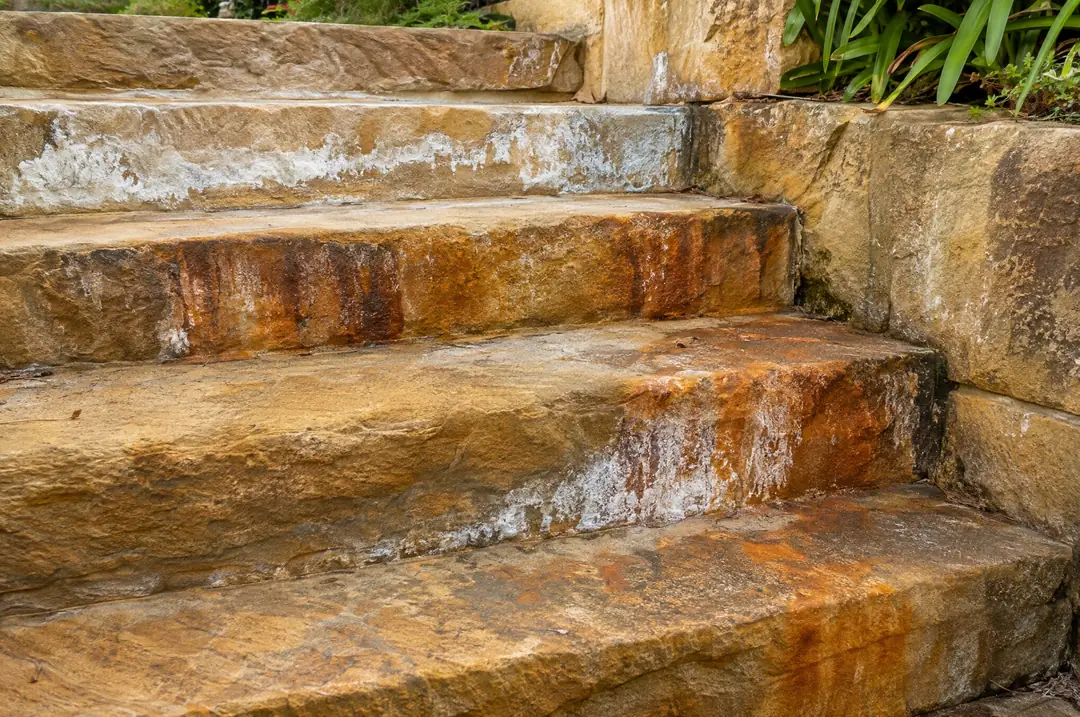
Rust from furniture feet, fixings and fertiliser. Efflorescence salts from moisture moving through walls and paving. BBQ fat, car oil and sunscreen. Tannin from leaves and timber. Black mould and lichen. Paint and graffiti. Each one needs a different treatment, and the stone sets limits: what is safe on granite can destroy travertine.
Our main tool is the poultice: an absorbent paste mixed with the right reagent, spread over the stain and left to dry. As it dries, it pulls the stain out of the pores rather than just lightening the surface. Stubborn stains may need several rounds.
We test first and give you an honest expectation. Some deep, old stains will lighten a great deal but not disappear, and we'd rather tell you that before we start.
Signs you need stone stain removal
- Orange-brown rust marks
- White powder or crust (efflorescence)
- Dark oil or grease patches
- Brown tannin shadows from leaves or timber
- Black mould spots
- Paint, graffiti or tape residue
How we do it
- Identify the stainFrom its colour, location and history. Sometimes a spot test confirms it.
- Choose a stone-safe reagentMatched to both the stain and the stone. Acid-based rust removers are never used on travertine or limestone.
- PoulticeApplied, covered, left to dry fully, then removed. Repeated if it's working but not finished.
- Neutralise and rinseResidues are removed so they can't cause new marks.
- ProtectAn optional penetrating sealer so the next spill stays on the surface.
Why DIY stain removers backfire
Off-the-shelf rust removers are often acidic. On sandstone they can release more iron and spread the stain. On travertine they etch the surface. Bleach on oil stains does nothing to the oil and can leave its own marks. The safe route is to identify the stain first, then treat it.
For efflorescence, removing the salt is only half the job. The moisture driving it has to be reduced, or it will come back.
Aftercare
- Use furniture glides and saucers with feet.
- Keep fertiliser granules off stone. Many contain iron.
- Blot spills, don't wipe them, then rinse with water.
Frequently asked questions
Straight answers from our stone-care technicians.
How do you remove rust stains from sandstone?
With a poultice and a reagent suited to sandstone, applied and left to dry so it draws the iron out. We avoid the acidic removers that can make sandstone staining worse.
What is the white powder on my pavers?
Efflorescence: salts left behind as water evaporates from the stone. It can be brushed and treated, but it recurs until the moisture source is dealt with.
Can oil stains come out of travertine?
Often, yes. Oil responds well to solvent poultices that pull it back out of the pores. Old, polymerised oil is harder, but usually improves a lot.
Will stain removal damage my sealer?
Some treatments remove sealer locally, so we re-seal the treated area to match.
Can graffiti be removed from sandstone?
Usually, with specialist graffiti removers and poultices. A sacrificial anti-graffiti coating can be considered for repeat targets, but it needs to suit the stone and any heritage requirements.
Do you guarantee a stain will come out?
We guarantee the method and our care, not that every stain will vanish. We test first and tell you what to expect.
Related services
- Sandstone restorationRestoration goes past cleaning. It deals with what has gone wrong inside the stone: deep rust and…
- Travertine cleaningTravertine is calcium carbonate. Any acid, from a pool-shop 'tile cleaner' to a squeeze of lemon,…
- Sandstone cleaningSandstone is soft. Blast it with a high-pressure tip and you remove the stone itself, not just the…