Sandstone cleaning and sealing in Seaforth
From Middle Harbour sea walls to retaining walls under the gum trees, Seaforth sandstone stays damp. That moisture is the starting point for how we clean and seal it.
- Seaforth 2092
- $20 million public liability
- Price on request
Seaforth sandstone stays wet for longer than stone in most of Sydney. Waterfront walls and steps are splashed by the harbour, slopes channel ground water through retaining walls, and tall trees keep many gardens in shade. Constant moisture brings algae and mould on the lower levels, lichen on caps and coping, and tannin from leaf litter. On the harbour side, salt carried in with the tide crystallises in the surface as the stone dries between high tides, and the face slowly softens and sheds grains. Understanding which part of the property is wet, and why, guides everything we do.
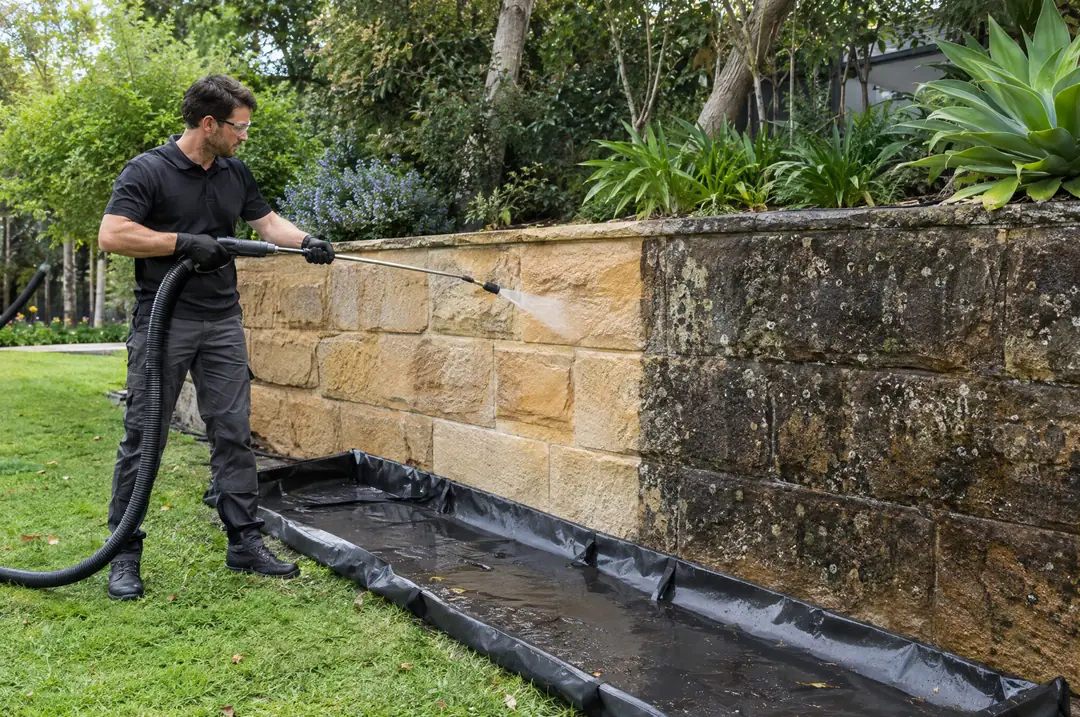
Cleaning starts with a biocide pre-treatment on the green and black growth, left long enough to kill it right through. After that come soft brushes and an unhurried rinse, sometimes with warm water for greasy grime. On salt-weakened stone near the water, pressure stays very low and some areas are cleaned by hand. Tannin stains on terraces get a targeted cleaner or poultice. We never use acid, which reacts with iron in the sandstone and leaves orange staining, and never a close high-pressure jet, which strips the weathered surface. Wash water is captured on site so nothing runs into Middle Harbour or the bush.
On a Seaforth property, sealing is worthwhile for paving, terrace floors, stairs and pool coping, where a breathable penetrating sealer slows salt and stain uptake. It is often not worthwhile for retaining walls or sea walls, which need to release moisture through their face. Sealing those can trap salts and speed up decay. Our technicians check moisture levels before sealing, and on shaded slopes that means waiting for a proper dry spell. You choose a natural or enhancing finish from test patches. We record the product and date, so future maintenance is easy to plan.
Frequently asked questions
Sandstone questions we hear in Seaforth.
Can you seal a sandstone sea wall?
We generally advise against it. Sea walls are wetted by the tide and need to release moisture through the face. A sealer can trap salt inside and accelerate decay. Regular gentle cleaning is the better approach.
Our harbour steps are dangerously slippery. Can that be fixed?
Slippery steps are usually caused by algae. A biocide clean removes it and makes the stone safer underfoot. Shaded steps near the water will regrow over time, so a maintenance clean every year or so helps.
Can old sandstone stairs be cleaned without making them look new?
Yes, and that is our aim. Cleaning brings back the colour and banding while keeping the weathered character. We do not grind or blast the surface.
How long before sealed sandstone can get wet?
Most penetrating sealers need around a day without rain or foot traffic to cure. We check the forecast and tell you the specific time for the product used.