Sandstone cleaning and sealing in Newport
Newport sandstone ranges from wind-exposed clifftop paving to damp Pittwater steps. Cleaning and sealing are tailored to which side of the peninsula the stone faces.
- Newport 2106
- $20 million public liability
- Price on request
On the ocean side of Newport, around Newport Beach and Bungan Head, sandstone terraces, walls and pool surrounds take salt spray and wind. The stone shows a gritty surface, white bloom and grey salt grime, and on older walls the face can start to flake. On the Pittwater side, around Salt Pan Cove and the waterfront streets, sandstone sea walls and landing steps grow algae that makes them slippery, and lower terraces stay damp. Shaded valley blocks, as in neighbouring Bilgola, deal with mould and leaf staining. Many properties have more than one of these conditions.
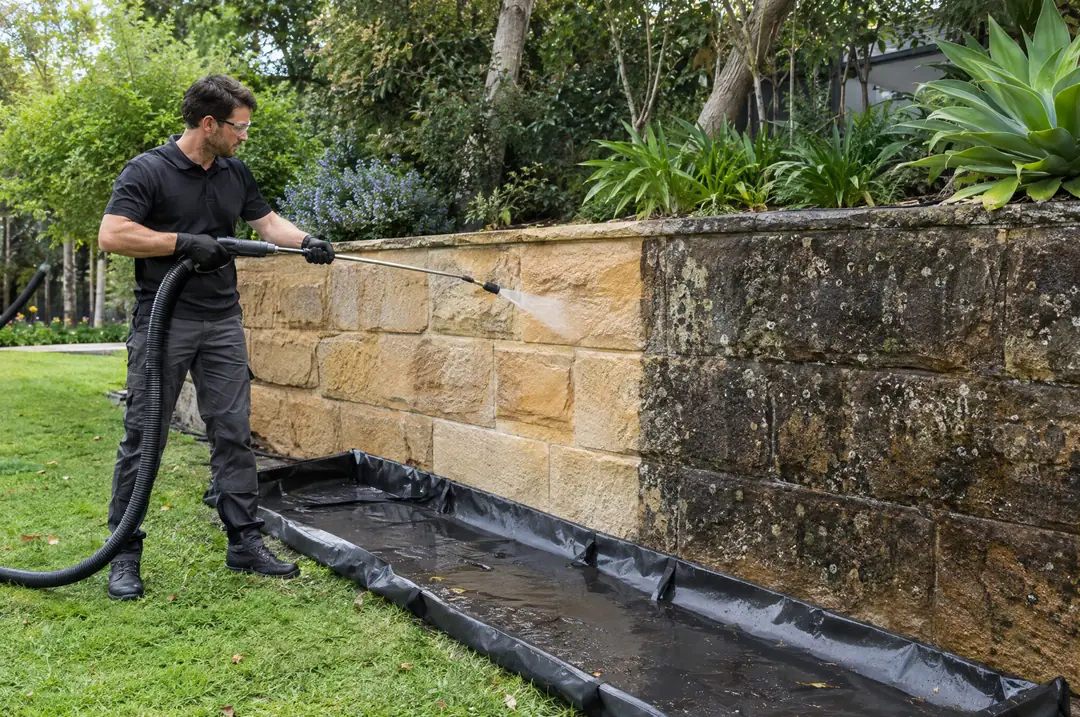
Our technicians clean Newport sandstone starting with a test patch. Salt is rinsed off with fresh water at low pressure. Algae, mould and lichen are killed off with a biocide first, then lifted with soft brushes and a gentle rinse. On damp Pittwater steps, killing algae at the root is what keeps them from becoming slippery again within weeks. Flaking clifftop stone is cleaned by hand or with minimal pressure. We do not use acids, which stain Hawkesbury sandstone orange. Wash water is captured and removed, never sent into Pittwater or down the cliff.
Sealing is often worthwhile on Newport's ocean-facing paving, terraces, steps and pool coping. A breathable penetrating sealer slows salt uptake and staining while leaving the surface natural and grippy. Pittwater sea walls and retaining walls are generally left unsealed so the water inside them has a way out. Before sealing, stone is rinsed of salt and fully dried, and we choose a calm day so spray does not settle on wet sealer. Clifftop paving should be checked yearly with a water-drop test, while sheltered Pittwater-side paving usually lasts longer between re-seals.
Frequently asked questions
Sandstone questions we hear in Newport.
Why are our Pittwater steps slippery again soon after pressure cleaning?
Pressure cleaning removes visible growth but often leaves roots in the stone, and can roughen the surface so it regrows faster. A biocide treatment kills the growth at the root and lasts longer.
Can you seal sandstone paving on a clifftop?
Yes. Exposed paving benefits from a breathable penetrating sealer chosen for salt exposure. We seal on a calm, dry day after rinsing off salt.
Our older sandstone wall is flaking on the ocean side. What can be done?
Flaking is usually salt damage. We clean gently and can assess restoration options, such as removing salts with poultices. Badly eroded stone may need a stonemason.
Do you clean sandstone around Bilgola valley homes?
Yes. Shaded valley paths and walls usually need biocide treatment for mould and leaf staining. We collect run-off at each level of a steep block.