Sandstone cleaning and sealing in Freshwater
In Freshwater, sandstone walls and steps sit within reach of the surf. A gentle clean removes the salt and grime, and the right sealer slows the next round.
- Freshwater 2096
- $20 million public liability
- Price on request
Sandstone in Freshwater shows salt damage earlier than stone further inland. Front walls and steps near the beach often feel gritty to the touch, with grains coming away on your hand, and some develop a thin white crust after dry, windy weeks. Shaded sides of the same walls carry black mould and algae instead. Apartment buildings add another type: sandstone-clad entries and courtyard paving that collect traffic grime and stains from planters. Each of these is a separate problem, and treating them all with one pressure washer is how many walls in beach suburbs end up eroded and patchy.
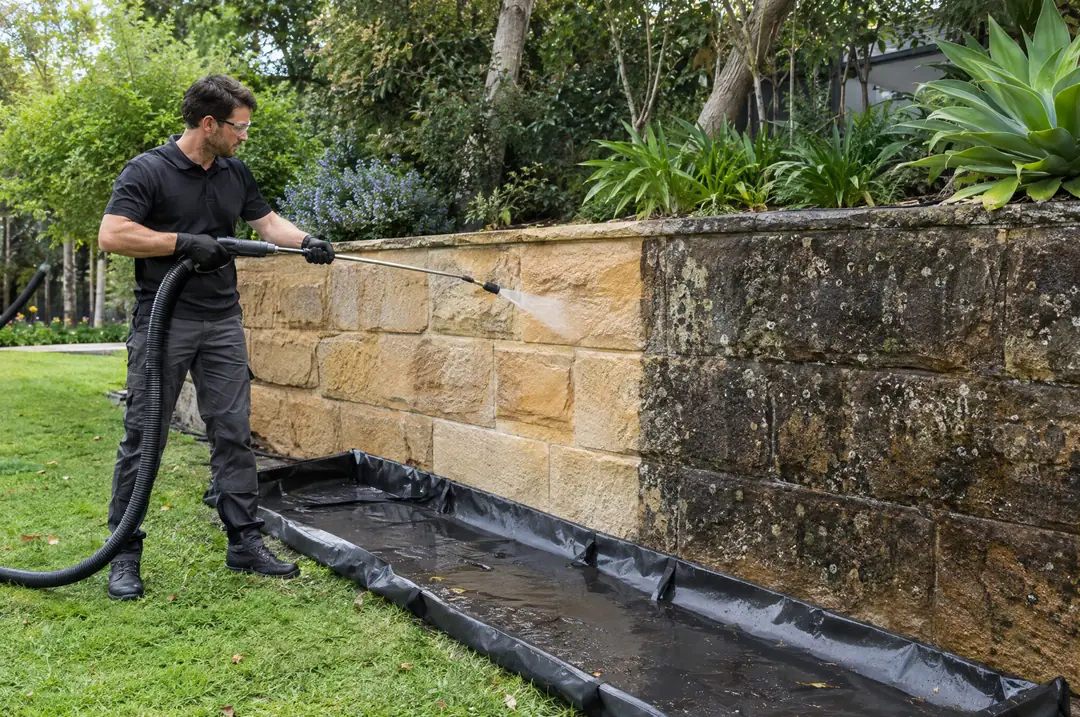
Our technicians begin with a test patch and a close look at the surface. Mould and algae get a biocide that is given time to work. Salt is removed with fresh water at low pressure, sometimes with a poultice where bloom is persistent. Grime is lifted with suitable cleaners and soft brushes. On stone that is already sandy or flaking, we turn pressure down to a rinse or work by hand. Run-off from every stage is bunded and vacuumed up, because in Freshwater the street drain is never far from the beach. If the stone needs more than cleaning, we will tell you.
Sealing is worthwhile for most Freshwater paving, steps and pool coping. An impregnator that lets the stone breathe cuts down how much salty water and spray the stone absorbs while still letting it dry. Walls that draw moisture from the ground, such as retaining walls and some older garden walls, are usually better left unsealed. Because the air here is salty, we rinse the stone thoroughly and let it dry before sealing, so salt is not trapped under the new protection. Do a water-drop test on beach-facing paving every year and re-seal once drops start soaking in.
Frequently asked questions
Sandstone questions we hear in Freshwater.
Our sandstone steps shed sand when we sweep. Can they be saved?
Usually, if caught early. Sanding is a sign of salt loosening the grains. We clean very gently, remove surface salt and may recommend a consolidation or restoration assessment before sealing. Badly eroded treads may need a stonemason.
Can you remove the white crust from our front wall?
Yes, usually with fresh water and brushing, sometimes a poultice. The crust is salt and will return if moisture keeps moving through the wall, so we help you find the source.
Is it worth sealing sandstone this close to the surf?
For paving, steps and coping, generally yes. A penetrating sealer slows salt uptake. It will need checking more often than sealed stone further inland.
Can you clean sandstone cladding on our apartment building?
We can assess it. Facade work at height needs safe access arrangements, which we discuss with your building manager before quoting.