Sandstone cleaning and sealing in Clontarf
Clontarf sandstone runs from the street down to the tide line, and each level needs a slightly different approach. We clean it gently and keep every drop out of the harbour.
- Clontarf 2093
- $20 million public liability
- Price on request
On a Clontarf block, the sandstone near the street usually looks the healthiest. Walls and entry steps at road level carry dust and some lichen but drain freely. Halfway down, terraced walls hold back the slope and stay damp, often with moss in the joints and black growth on the face. The lowest steps and walls, near the foreshore, are the hardest worked: wet for long stretches, carrying algae that turns slippery, and showing salt crusts above the tide line. Our technicians treat each level as its own job, testing products on a small area first, because what suits a dry street wall can be too strong or too weak elsewhere.
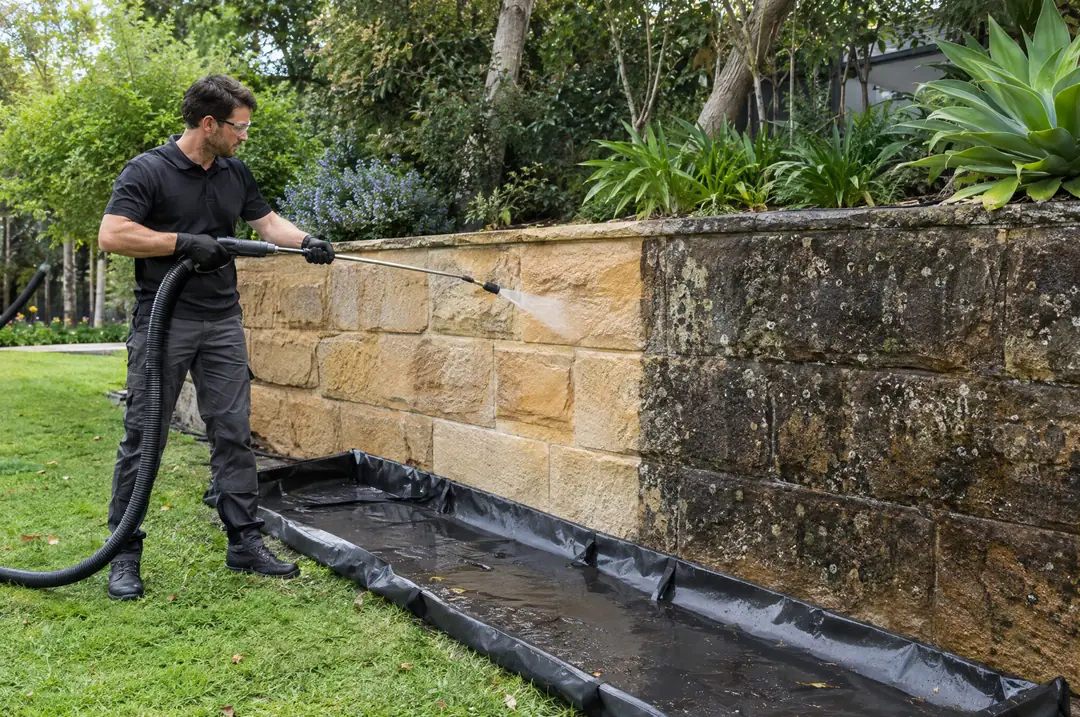
Algae and mould get a biocide first, with a proper dwell before anyone picks up a brush; growth that dies at the root stays away longer, and the steps stay safer. Rinsing is done at low pressure, never with a turbo tip, which would cut into sandstone already softened by salt. Salt crusts are brushed off dry and then dissolved with fresh water in small amounts. On the waterfront levels, we work only when the tide allows, stage containment so wash water is caught before it reaches the foreshore, and vacuum it up. Polluting waters is an offence under NSW pollution law, so nothing goes over the edge.
Sealing decisions follow the levels too. Stone at the top of the block and on sunny terraces usually benefits from a breathable penetrating sealer that slows salt and grime from entering. We leave retaining walls backed by wet soil unsealed, and the same goes for stone within reach of tidal water, because it cannot dry out enough and a sealer would trap salt inside. On terraces we lay test patches of natural and enhancing sealers for you to compare in daylight. We record the product and the date, and on exposed waterfront stone we suggest a yearly check with a few drops of water to see whether they bead or soak in.
Frequently asked questions
Sandstone questions we hear in Clontarf.
The bottom steps to our jetty are very slippery. Can cleaning fix that?
Usually, yes. Slipperiness on tidal steps is mostly algae. Biocide treatment and a gentle scrub remove it, and regular maintenance keeps it down. Steps that are always wet will regrow faster than those higher up.
Will you rinse the sea wall into the harbour?
No. Wash water is contained and recovered. Polluting waters is an offence under NSW law, and it is also the wrong way to treat a harbour you live beside.
Our sandstone is flaking near the water. Is it too late?
Not necessarily. Light flaking can be slowed by removing salt and improving drainage. Deep erosion or loose blocks need a stonemason, and anything structural needs an engineer first.
Do you need low tide for every job?
Only for stone near the water line. Upper terraces and walls can be done at any time; we schedule the lower levels around the tide table.