Sandstone cleaning and sealing in Tamarama
On Tamarama's slopes, sandstone deals with ocean salt on one face and damp shade on another. We clean both gently and seal the surfaces that need it.
- Tamarama 2026
- $20 million public liability
- Price on request
Tamarama properties often have sandstone in several forms on one block: retaining walls holding the valley side, stairs linking the levels, terrace paving looking toward the beach, and garden edging. Facing the ocean, the stone collects salt crust and white bloom, and its most exposed edges soften and flake. Facing away from the sun, walls and stairs stay damp and turn green or black, and become slippery after rain. Our technicians assess both conditions on every job before choosing products, because what removes algae will not remove salt, and treating everything with one product usually leaves half the problem behind. The walk-around takes time, but it saves money.
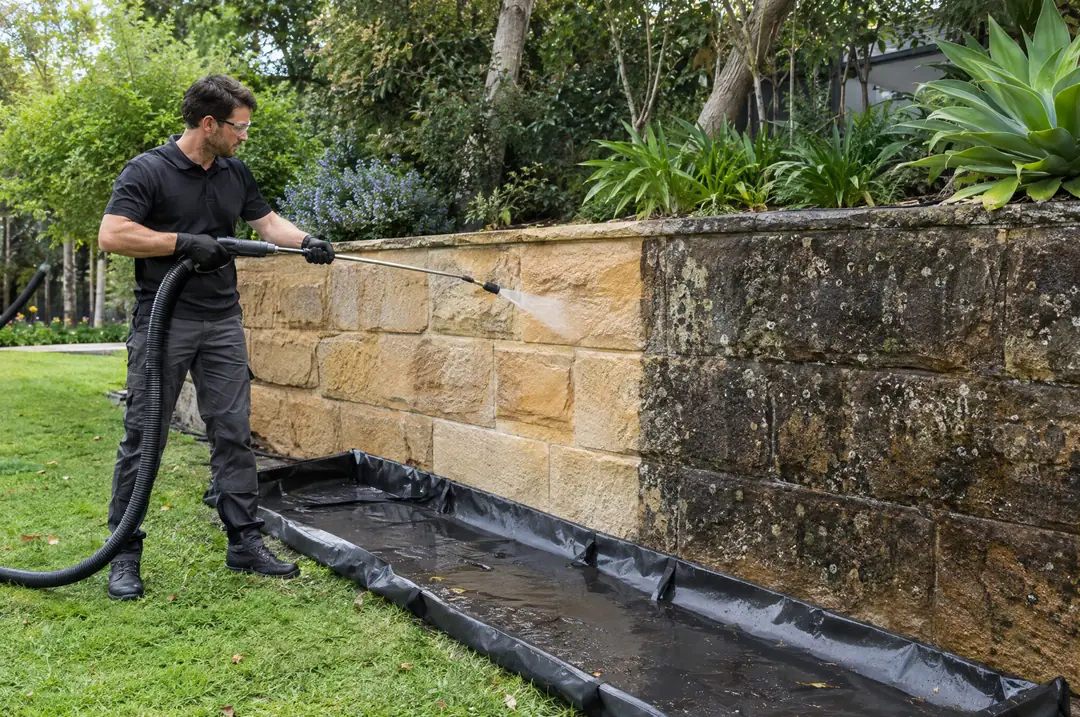
Algae and mould get a biocide application with enough dwell time to kill them properly, then a gentle rinse. Salt crust is brushed off dry and softened with fresh water before rinsing. No high-pressure tips are used anywhere on the property, because salt-weakened sandstone erodes quickly under a jet and the damage is permanent. Run-off is bunded at each terrace level and recovered, so nothing flows down to the street or the beach. Stone that is delaminating or loose is noted for a stonemason, and any retaining wall showing movement is flagged for an engineer before we go further with cleaning or sealing.
Sealing is valuable on terrace paving, stairs and wall caps facing the ocean, where a breathable impregnator reduces how much salty water soaks into the pores. It also helps shaded stairs shed water and dry faster, which slows the return of algae. Retaining walls that carry ground moisture are usually left unsealed. We apply sealer only on calm, dry days, record the product and areas, and recommend a regular water-drop test, because exposed Tamarama stone tends to need resealing sooner than stone in sheltered suburbs. Between visits, a gentle hose-down of the ocean-facing surfaces every few weeks keeps salt from building up on the stone.
Frequently asked questions
Sandstone questions we hear in Tamarama.
Can you clean our sandstone stairs without making them more slippery?
Yes. Removing algae and mould makes them less slippery, and penetrating sealers don't add a film. We avoid any glossy product on stairs.
Why is our terrace paving flaking at the edges?
Salt crystallisation is the most likely cause; edges dry fastest and take the most spray. Sealing and regular rinsing slow it down.
Do you seal retaining walls?
Rarely. Walls holding back soil usually carry moisture through their face and need to breathe. We focus sealing on paving, stairs and caps.
How often should our sandstone be checked?
On ocean-facing areas, test with a few drops of water at least once a year, ideally each spring and autumn. Sheltered areas can go longer.