Sandstone cleaning and sealing in Point Piper
Point Piper sandstone works at the water's edge. We clean it with biocides and low pressure, keep every litre of run-off out of the harbour, and seal where salt is doing damage.
- Point Piper 2027
- $20 million public liability
- Price on request
On a Point Piper estate the sandstone tends to sit in bands. The lowest courses of a sea wall take wave splash and grow green algae and weed. Above them, steps and landings collect salt crust and turn slippery underfoot. Higher again, terraces and balustrades face full sun and glare reflected off the harbour, which drives rapid cycles of wetting and drying. Each band needs a different treatment and a different expectation of how long the result will last. Our technicians therefore assess the stone from the water level up, noting soft or flaking faces, failed old coatings and rust from fixings, before choosing a single product.
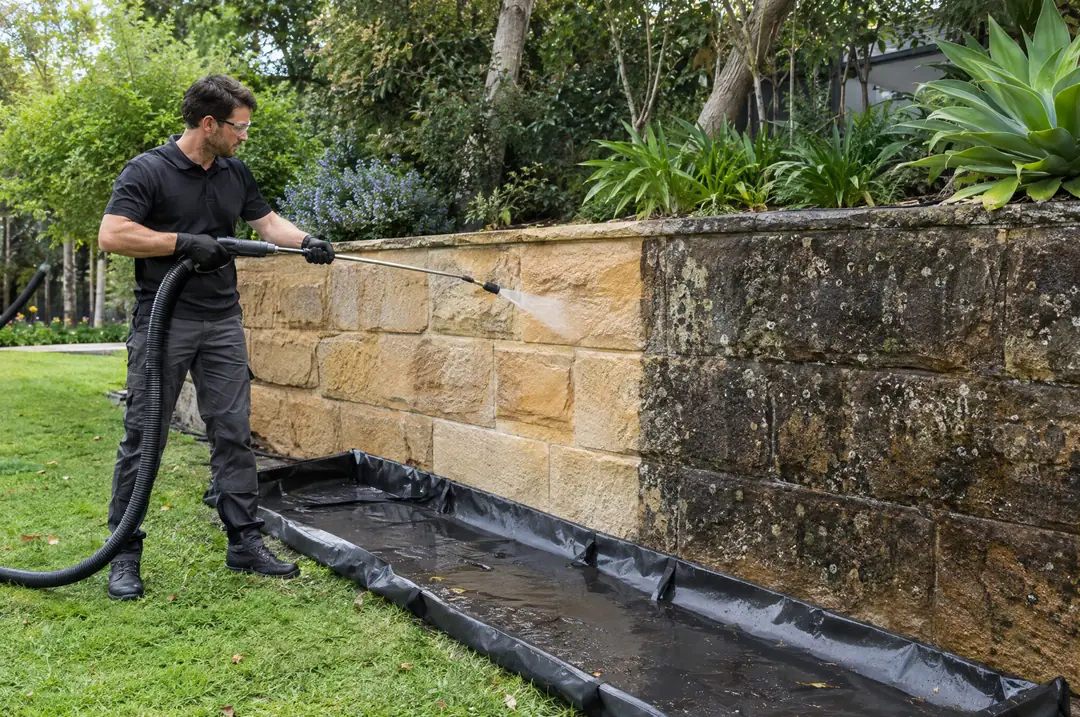
Green growth on waterfront sandstone is killed with a biocide and allowed to dwell, then rinsed away at low pressure. That keeps the face intact and slows regrowth far more than blasting it off. Salt deposits are softened with fresh water and lifted the same way. Everything that runs off is caught in bunds and vacuumed up before it can reach the harbour, and products are chosen with the water in mind. Where earlier contractors have left pale stripes from high pressure or orange iron stains from acid, we record them separately, because they call for restoration rather than another clean, and we quote that work with a realistic expectation of the outcome.
Sealing is often worthwhile on Point Piper terraces and steps, because they take salt every single day. We use breathable impregnators that sit inside the pores, so salty water beads off but moisture already inside the wall can still escape. Glossy coatings are avoided entirely; on waterfront stone they cloud, peel and trap salt beneath the film, and removing them later costs more than the original job. The sealer is chosen after an absorbency test, applied only to fully dry stone and logged with the date and product so the next reseal can be planned around your calendar. Sheltered upper terraces usually go longer between coats than landings near the water.
Frequently asked questions
Sandstone questions we hear in Point Piper.
Why does our sea wall go green again so quickly?
Stone that stays wet from splash is ideal for algae. A biocidal clean that kills the growth at the root lasts much longer than a pressure wash, but walls in the splash zone still need periodic maintenance.
Can sealing protect the lowest sea wall courses?
Stone that is regularly submerged or soaked by waves is not a good candidate for sealing, because the sealer cannot cure and the stone cannot dry. We focus sealing on landings, steps and terraces above that zone.
There are rust stains under the balustrade fixings. Can they be removed?
A poultice that pulls the iron out of the pores usually fades them considerably. The fixings themselves should be checked, because they will keep staining if they are corroding.
Is the cleaning product safe for the harbour?
We choose products suited to the setting and, more importantly, we don't let the run-off reach the water. It is bunded, vacuumed up and disposed of correctly.