Sandstone cleaning and sealing in Cromer
Cromer sandstone ranges from bush-shaded walls on Cromer Heights to damp paving near the lagoon. We match the method to each and check moisture before sealing.
- Cromer 2099
- $20 million public liability
- Price on request
In Cromer, sandstone tends to sit low in the garden: paving around the house, steps between lawn levels, garden walls and the coping and surrounds of a pool. On Cromer Heights, retaining walls and steps near the bushland reserve carry mould, lichen and tannin stains under the trees. Closer to the lagoon and the golf course, the main trouble is moisture: algae on paving, moss in joints and a white salt crust where water rises through the stone and evaporates. Our technicians walk through the property with you, identify which problem is on which surface, and trial a cleaner on a small area before treating everything else.
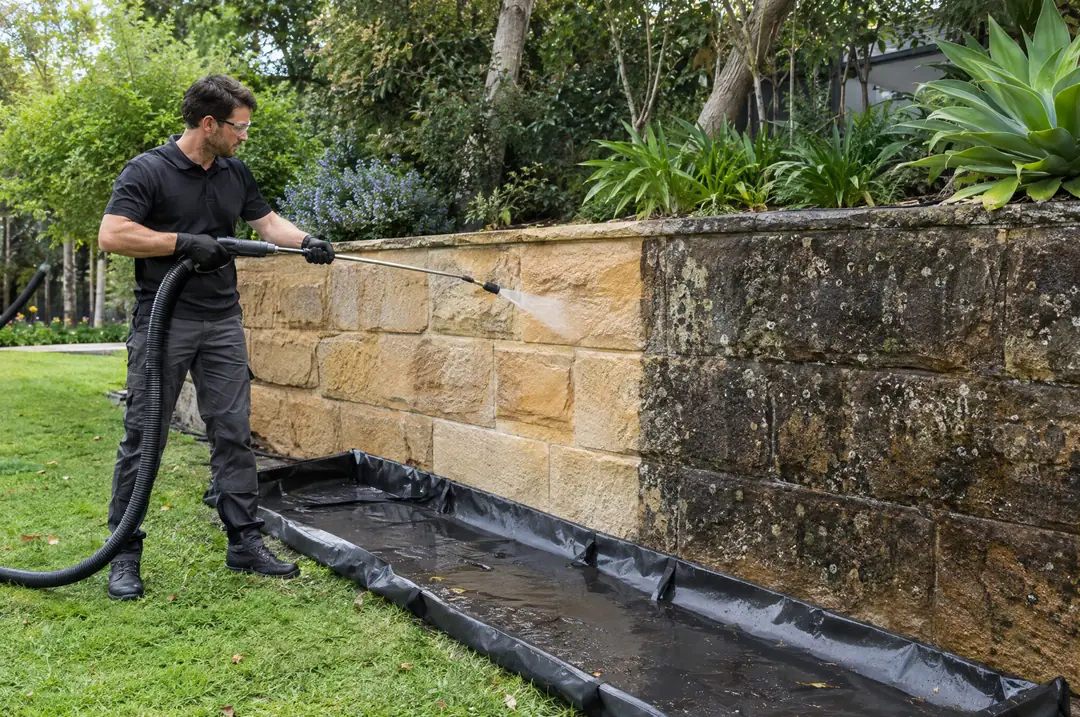
Growth is killed with a biocide chosen for natural stone and left to work before any scrubbing; soft brushes then clear it and a light rinse follows. Salt crusts come away with a dry brush. Tannin stains get a targeted cleaner or a poultice. A turbo tip and acid are both kept off sandstone: the first erodes the surface and the second leaves orange iron stains. Bunds hold the wash water until the wet vacuum collects it, and on flatter ground we work in small sections so water does not pool and spread across the paving. It is kept off lawns and garden beds too, and none of it is sent toward Narrabeen Lagoon.
Before sealing we take a moisture reading. Stone that dries properly between rain, such as raised paving, steps, wall caps and pool coping, is a good match for a breathable penetrating sealer, which holds off algae, tannin and grime. Paving that draws moisture from below is left unsealed, since a sealer would lock the salt in, and the face would start to crumble. We seal on a dry day, in thin coats, and wipe off any surplus so no film remains. Samples on your own stone let you weigh a natural finish against an enhancing one. The product and date go into our notes, and we suggest a yearly look at shaded and low-lying areas.
Frequently asked questions
Sandstone questions we hear in Cromer.
Why does our paving near the lagoon side keep going green?
Damp ground and shade suit algae. Biocide cleaning removes it at the root, and improving drainage and airflow slows its return.
Is a white crust on paving a sign of damage?
It is salt left by evaporating moisture. In small amounts it is cosmetic, but persistent crystallisation can break down the surface over time, so it is worth addressing.
Can you seal stone that stays damp?
We advise against it. Sealing traps moisture and salts inside the stone, which leads to flaking. We would rather leave it breathing and keep it clean.
How long after cleaning before the pool can be used?
Usually once rinsing is complete and the cover is off, often the same day. After sealing, we confirm a waiting time based on the product.