Sandstone cleaning and sealing in Little Bay
Little Bay sandstone ranges from heritage hospital fabric to new garden walls and courtyards. We clean it gently and seal what the salt and traffic reach.
- Little Bay 2036
- $20 million public liability
- Price on request
Sandstone in Little Bay appears in two forms. On the newer residential buildings it is used in landscaping: garden walls, steps, feature walls and courtyard paving, much of it exposed to onshore wind. On the older parts of the Prince Henry site, stone belongs to the heritage fabric and has weathered for many decades. Common problems include a gritty salt crust on seaward faces, algae on shaded steps, efflorescence where irrigation keeps walls wet, and scuffs and spills in high-use courtyards. Our technicians inspect each area and test on a small patch before quoting, and the scope we send separates new landscape stone from any heritage fabric.
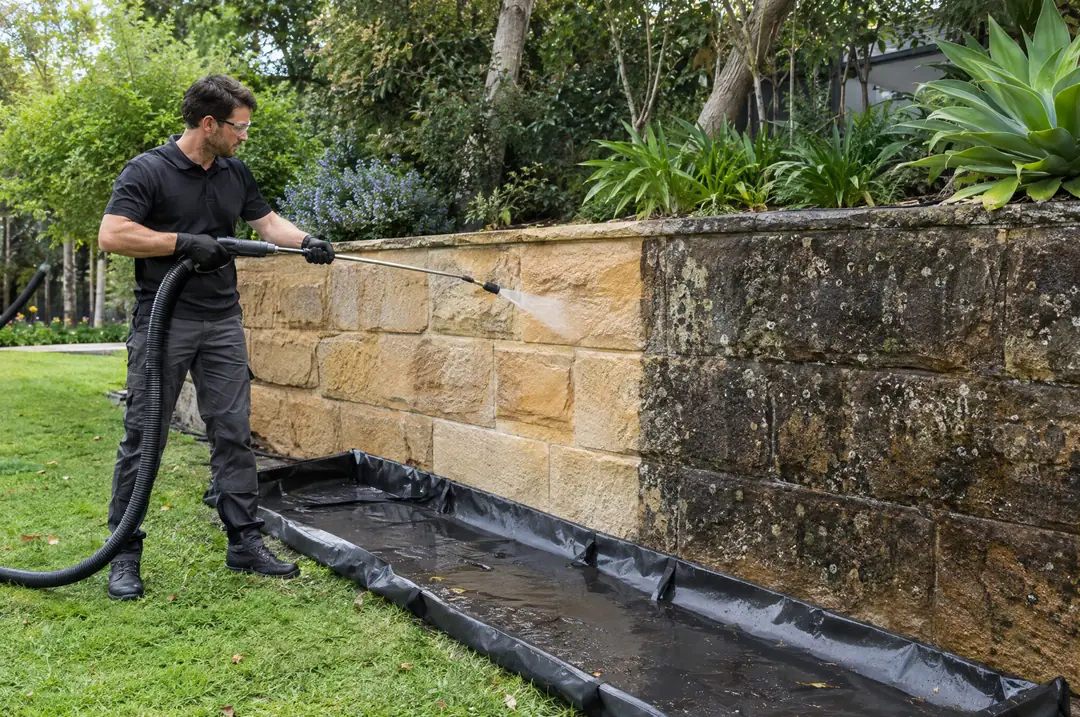
Crusted salt is dealt with before any water arrives, by soft brushing and vacuum, then the stone gets a light fresh-water rinse; poultices handle salt that has migrated deeper into walls. Algae is killed in place and allowed to dry out before it is washed off. Courtyard spills and scuffs respond to a stone-safe detergent and soft rotary brushing. Heritage stone receives the mildest version of each step and longer dwell times. A cutting jet is never used on any of it. Run-off is contained with mats and bunds and recovered by wet vacuum, so it does not reach the stormwater that drains to the beach.
Sealing suits the horizontal and high-traffic surfaces in Little Bay: courtyard paving, steps and wall caps. A penetrating sealer that still breathes keeps salt and spills from soaking in, which means the cleaners' routine mop and rinse actually achieve something between our visits. Freestanding feature walls and retaining walls are usually left unsealed. For heritage stone, sealing is discussed with whoever manages the site's heritage obligations before anything is applied. Strata committees see sample patches first and receive a record of the product and areas. In this exposure, a water-drop test on the paving each year shows when the protection is fading and resealing should be scheduled.
Frequently asked questions
Sandstone questions we hear in Little Bay.
Why does our building's sandstone feature wall have white patches?
Usually salts, either from sea spray or from irrigation water moving through the wall. They are brushed off dry and the moisture source is checked.
Can heritage sandstone at Little Bay be cleaned?
Yes, with conservation methods, once any heritage approvals or written confirmations are in place.
How do you keep courtyards usable during cleaning?
We work in sections with barriers and signs, keep a dry route open, and schedule around the building's busy times.
Should our sandstone retaining walls be sealed?
Rarely. Soil behind the wall keeps feeding it moisture, and a sealed face would hold that water and its salts inside the stone.