Sandstone cleaning and sealing in Dover Heights
Sandstone on the Dover Heights clifftops takes salt every day. We remove the crust gently and seal with breathable impregnators chosen for the exposure.
- Dover Heights 2030
- $20 million public liability
- Price on request
Sandstone in Dover Heights appears as garden and boundary walls, entry stairs, paving and landscape features, often set alongside newer stones on contemporary homes. On the eastern side of the suburb, all of it sits in the path of salt spray coming straight off the ocean. The visible signs are a grey crust on horizontal surfaces, white bloom where salt water has dried, and a sandy, flaking surface on the most exposed faces and arrises. Walls on the sheltered western side of a house may carry mould or lichen instead, but on most properties along the cliff line, salt is the bigger issue and the one that shapes our recommendations.
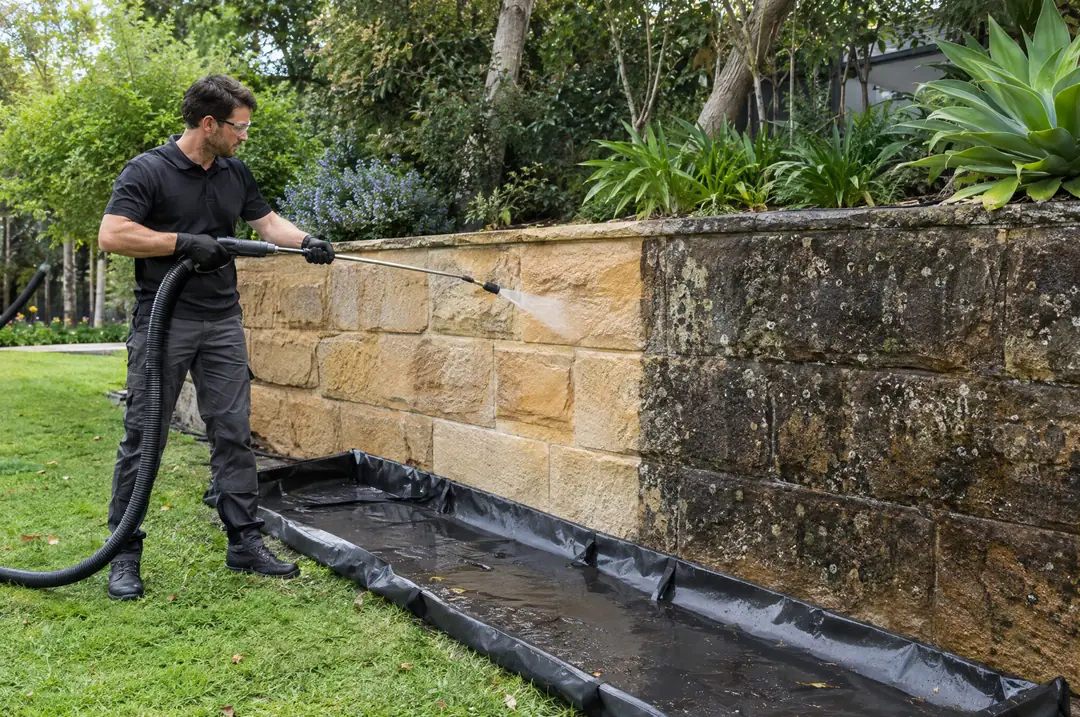
Our technicians soften salt crust with fresh water and lift it with suitable cleaners and a gentle rinse, never a high-pressure tip, because salt-weakened sandstone erodes very quickly under a jet. Where mould or lichen is present, it is treated with a biocide and given time to work before any rinsing. Nothing is allowed to drain toward the cliff edge or the street; the wash water is held and vacuumed away. We note any stone that is delaminating or crumbling and discuss whether a stonemason should assess it before sealing, since sealing over loose stone only delays the inevitable. Glass, render and timber nearby are protected throughout the job.
On a clifftop, sealing is usually worthwhile for paving, stairs and wall caps that take direct spray. We use a breathable impregnator rated for salt, applied to clean, dry stone on a calm day, so salty water beads off rather than soaking in, while moisture inside can still escape. The stone keeps its natural look and grip. Because the exposure is so severe, we recommend a shorter check interval for the most exposed areas than anywhere else we work, and suggest a fresh-water rinse with a garden hose every few weeks to stop salt building up between visits. That simple habit adds noticeably to the life of the sealer.
Frequently asked questions
Sandstone questions we hear in Dover Heights.
Why is our sandstone wall going sandy on the ocean side?
Salt crystallisation is the most likely cause. Salt carried in spray dries inside the stone and pushes grains off the surface. Cleaning, sealing suitable areas and regular rinsing slow it down.
Can sealing stop salt damage completely?
No sealer makes stone immune, but a penetrating sealer greatly reduces how much salty water gets in. On exposed clifftop stone, it needs checking more often than elsewhere.
How often should we rinse our sandstone?
On the most exposed sites, a gentle fresh-water rinse every few weeks helps keep salt from building up. Use a garden hose, not a pressure washer.
Can eroded sandstone be built back up?
Minor surface loss can sometimes be consolidated or patched by a stonemason. Deep erosion usually means replacing individual stones. We'll tell you when it's beyond cleaning and sealing.