Sandstone cleaning and sealing in Bronte
Many Bronte homes are built from sandstone, not just trimmed with it. We clean whole facades as carefully as a single step, and seal only what will benefit.
- Bronte 2024
- $20 million public liability
- Price on request
Bronte is one of the few places in the Eastern Suburbs where we regularly clean whole sandstone houses rather than individual features. On those homes the work covers facades, chimneys, sills and quoins as well as front walls, steps and garden terraces. Each elevation behaves differently: the ocean side carries salt and weathering, the gully side carries mould and lichen, and the street side carries traffic grime. Older cleaning may have left an uneven, patchy look, with pale areas from pressure washing and orange blooms from acid, that we try to even out gently rather than with force. That balance is what makes facade work slow.
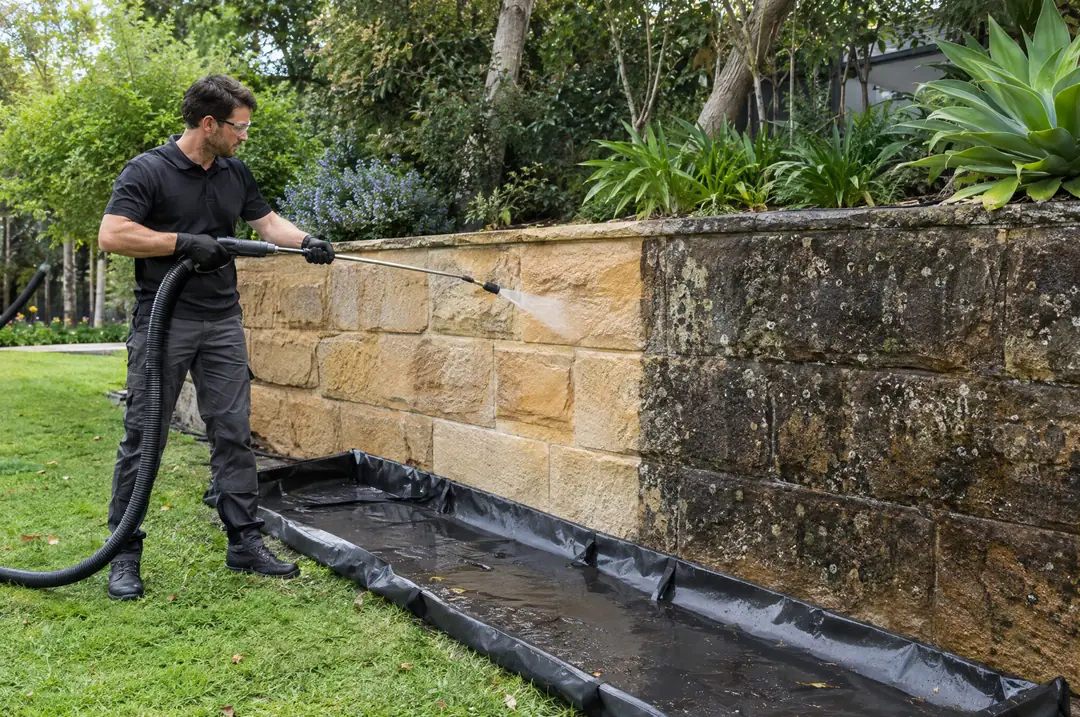
We start every Bronte facade with test patches on each elevation, then work from the top down so clean stone is never re-soiled by run-off from above. Biological growth gets a biocide and a proper dwell time. Salt is brushed off dry before rinsing. Grime gets a matched detergent. Every rinse uses gentle pressure or temperature-controlled hot water. Iron staining and old acid burn are treated with poultices left to dry on the stone. Run-off is caught at each level of the block and vacuumed away before it can reach the road, and windows, timber, paintwork and plants are protected throughout. Larger facades are usually spread across several days.
Whole sandstone walls usually do best unsealed, so they can breathe and dry after rain; a sealed facade can trap moisture and salts behind its face. Steps, paths, garden terraces and wall caps that take foot traffic or direct spray are better candidates for a breathable penetrating sealer. We discuss each surface with you, show test patches and record the product and areas treated. For homes in the Busby Parade conservation area, that record can be useful if questions are ever raised by Waverley Council or a heritage consultant. It also helps the next owner, who will otherwise have no idea what, if anything, was ever applied to the stone.
Frequently asked questions
Sandstone questions we hear in Bronte.
Will cleaning change the colour of our sandstone house?
It brings back the natural colour that grime and growth have hidden. It won't make the house look newly built; weathered stone keeps its character. We test first so you see the result in advance.
Should the facade be sealed after cleaning?
Usually not. Facades generally need to breathe. Sealing is better suited to steps, paths and caps that take traffic or direct spray.
Can you remove patchy marks left by an earlier clean?
Gentle cleaning often evens them out. Pale marks from high pressure are physical loss and soften only with weathering; orange marks from acid can be reduced with poultices.
How long does a full facade take?
It depends on size, condition and access. A modest semi might take a few days including dwell and drying time. The quote includes an expected timeline.